INTRODUCING PHILOSOPHY
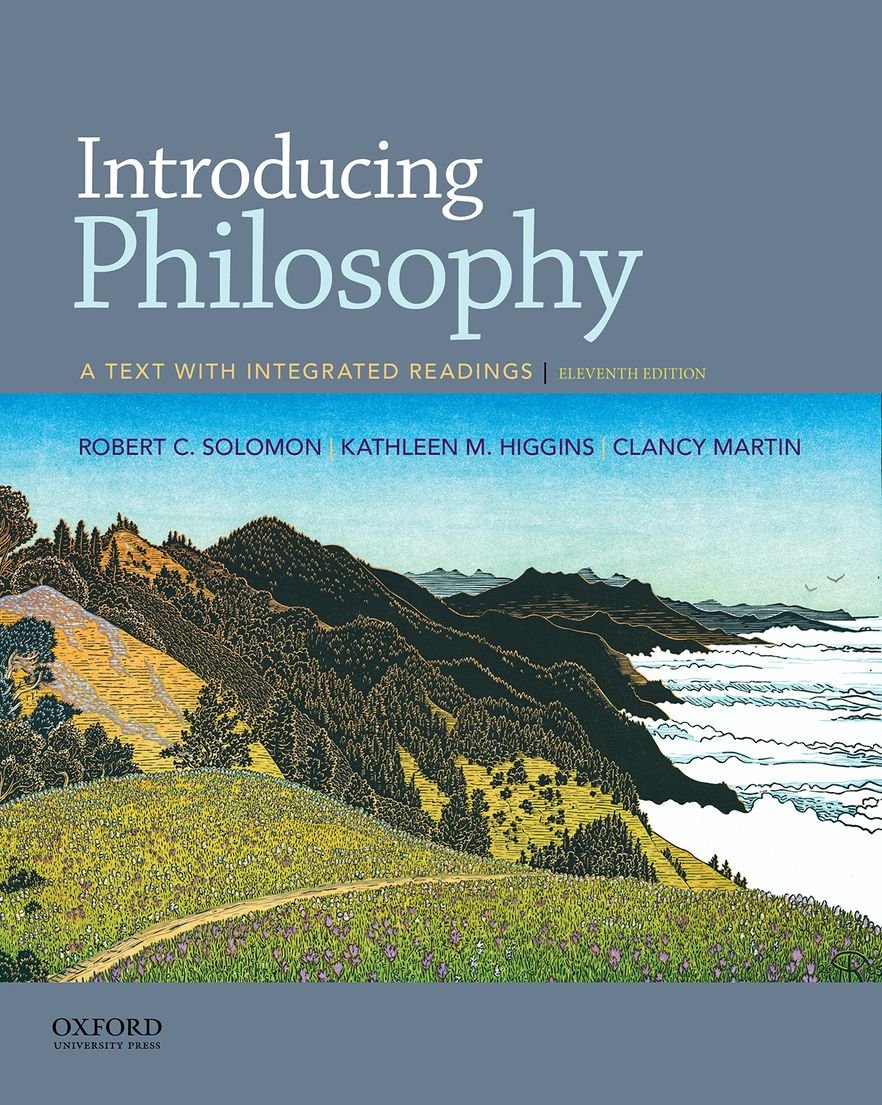
AUTHOR – ROBERT C SOLOMON
GENRE – History of Philosophy
YEAR PUBLISHED – 2020
PAGE COUNT – 646
READABILITY- Easy/Moderate
MY RATING – 4.4/5
What to expect?
- Introduction to all major Western Philosophical topics
- Primary source excerpts included (Writings of original philosophers)
- Covers topics like Religion, Knowledge, Reality, Justice, Truth, Morality
- This book is primarily written for Philosophy Students (Beginners)
Introduction
Most people assume philosophy is the exclusive territory of bearded academics arguing in dead languages about things that have no bearing on Tuesday morning. Robert C. Solomon spent his career proving that assumption wrong & Introducing Philosophy: A Text with Integrated Readings is perhaps his most sustained effort to do exactly that. This is a textbook & is one of those rare textbooks that does not read like a punishment. Solomon writes with the conviction that philosophy is not an academic exercise reserved for the initiated. It is, at its core, the business of learning how to think about being alive & once he frames it that way, it becomes very difficult to put down.
What the Book Actually Does
Solomon structures the book as a guided tour through the central questions of Western philosophy, organized thematically rather than as a dry chronological march through dead thinkers. The genius of this approach is that it keeps the questions alive. Rather than presenting Descartes or Kant as museum pieces, Solomon drops their ideas into ongoing conversations. Conversations about reality, knowledge, God, morality, the self & the meaning of human existence.
The integrated readings are what truly set this book apart from the competition. Primary source excerpts from the philosophers themselves are woven directly into Solomon’s commentary, which means the reader is never just hearing about what Plato said but they are reading Plato, guided by a thoughtful instructor standing just off to the side. It is the difference between being told a joke & actually hearing it. The effect is that even a reader with zero philosophical background finishes each chapter feeling like they have genuinely wrestled with the original ideas, not merely been handed a summary.
The Big Questions, Handled With Care
Solomon covers an impressive range of terrain without ever making the book feel like a frantic survey. He moves through epistemology which is the question of what we can actually know & how we can know it. The sections on metaphysics, which tackle questions about the nature of reality & existence, are handled with equal care but never disappearing into impenetrable jargon either.
The chapters on ethics & moral philosophy are among the strongest in the book. Solomon brings warmth to these sections, which makes sense given his broader body of work on emotion & the good life. He presents competing moral frameworks like consequentialism, deontology, virtue ethics & not as rival football teams to pick between but as different lenses that illuminate different corners of the same complicated human reality. A reader who arrives skeptical that philosophy has anything practical to offer will likely leave these chapters with their skepticism quietly revised.
The treatment of philosophy of religion is balanced & intellectually honest. Solomon neither dismisses the question of God’s existence as settled nor treats it as a debate with an obvious winner. He lays out the classical arguments like the ontological argument, the cosmological argument, the problem of evil & lets them breathe, which is the right approach for a subject this consequential.
Philosophy That Stays With You After the Last Page
The true test of any introductory book is not whether it explains its subject adequately but whether it leaves the reader permanently changed in some small but irreversible way. Solomon’s book passes that test. There is something that happens around the midpoint of this text, somewhere between the epistemology chapters and the discussions of personal identity, where the questions stop feeling like academic exercises and start feeling quite personal. Who am I, really? What do I actually know & how do I know it? Is there a moral framework I genuinely believe in or have I just inherited one without examination? Most readers will finish this book and find that certain conversations, certain assumptions, certain quiet certainties they carried into it no longer sit quite as comfortably as they once did. That is not a side effect of good philosophy. That is the entire point of it.
A Few Honest Caveats
The book’s Western centric focus is worth naming. Eastern philosophical traditions like Buddhist, Confucian, Hindu do receive minimal attention which is a limitation given how rich & relevant those traditions are to the same questions Solomon is exploring. Readers looking for a genuinely global survey of philosophical thought will need to supplement accordingly.
Conclusion
Introducing Philosophy does exactly what the best introductory books are supposed to do as it opens a door & makes you want to walk through it. Solomon is a generous, intelligent guide who respects his reader enough to bring them into the real conversation rather than offering a sanitized version of it. Whether you are a student encountering these ideas for the first time or a general reader who has always been curious but never quite known where to start, this book earns its place on your shelf.