A HISTORY OF PHILOSOPHY: MEDIEVAL PHILOSOPHY
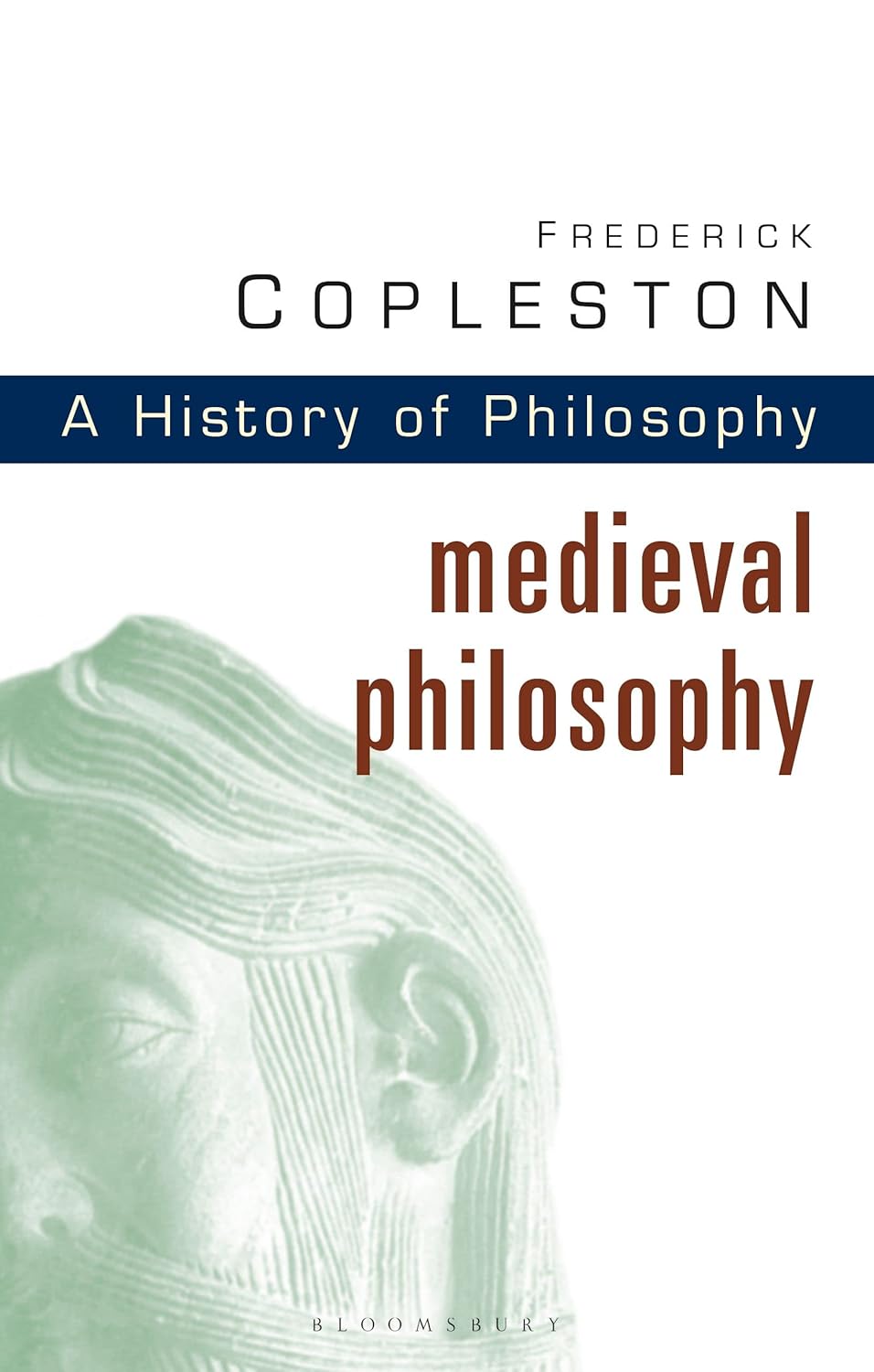
AUTHOR – FREDRICK COPLESTON
GENRE – History of Philosophy
YEAR PUBLISHED – 2003
PAGE COUNT – 624
READABILITY – Easy / Moderate
MY RATING – 4.2/5
What to expect?
- This book focuses on Augustine, Anslem, Thomas Aquinas & few others
- Copleston shows how Western Scholasticism emerged & how Aquinas used Aristotle for his theology
- Can be dense & overwhelming at times
Covering roughly a thousand years of intellectual history from Augustine in the late 4th century to Duns Scotus. This volume confronts a period that the popular imagination has often dismissed as philosophically barren. Copleston’s great achievement here is to demonstrate, with patience and precision, just how wrong that dismissal is.
Augustine: Philosophy in the Service of Faith
Copleston opens with Augustine of Hippo, the towering figure whose thought shaped Western Christianity of both Catholic & Protestant even more profoundly than any other single thinker after Paul. What makes Augustine philosophically significant is not merely that he was a theologian who used philosophy as a tool but that he genuinely wrestled with the deepest philosophical questions like the nature of time, the problem of evil, the relationship between will & intellect, the reliability of human knowledge.
The famous Augustinian argument against radical scepticism is that even if I am deceived about everything else, the very fact of my being deceived proves that I exist which anticipates Descartes’ cogito by more than a thousand years. Copleston handles this connection carefully, noting the similarities without collapsing the genuine differences in context and purpose. Augustine’s account of illumination which is the doctrine that the human mind requires divine light to grasp eternal truths is presented clearly as both a philosophical epistemology & a theological claim.
The Early Medieval Period & the Problem of Universals
The chapters covering the early medieval period like Boethius, Pseudo Dionysius, John Scottus Eriugena are among the most valuable in the volume for the general reader since these figures are rarely given adequate treatment in shorter introductions. Boethius writing in the early 6th century while awaiting execution, produced the Consolation of Philosophy which is one of the most widely read books of the entire medieval period & transmitted crucial Aristotelian logical texts to the Latin West. Pseudo Dionysius, whose identity remains unknown introduced a profoundly apophatic Neoplatonist theology into the Christian tradition that would influence everyone from Aquinas to Meister Eckhart. Eriugena, the remarkable 9th century Irish thinker, produced a bold pantheistic system that pushed the boundaries of orthodox theology to their limit and beyond.
The problem of universals arguably the central philosophical debate of the medieval period receives extended & clear treatment. The question is fundamental: when we use a general term like “humanity” or “redness,” does it refer to something that genuinely exists or merely to a name we apply to a collection of similar individual things? Realists like Anselm held that universals have genuine existence. Nominalists like Roscelin held that only individual things exist & universals are mere words. Moderate realists like Abelard attempted a middle path. Copleston traces this debate through multiple generations of thinkers with clarity & shows why it mattered specifically for the doctrine of the Trinity.
Anselm, Abelard & the Twelfth Century
Anselm of Canterbury receives one of the most careful treatments in the volume. His ontological argument for the existence of God & the argument that God, defined as that than which nothing greater can be conceived, must exist because existence is greater than non existence is presented in its original form with Copleston carefully distinguishing what Anselm actually argued from later versions & misrepresentations.
Peter Abelard who is a brilliant, controversial & tragic is treated with particular sympathy. His contribution to the universals debate, his development of the Sic et Non method of dialectical reasoning that would become foundational for scholastic methodology & his ethical theory which located moral worth in intention rather than act.
The High Scholastic Period: Albertus Magnus and Thomas Aquinas
The heart of the volume is its extended treatment of Thomas Aquinas, the philosophe theologian whose synthesis of Aristotelian philosophy & Christian theology represents the greatest intellectual achievement of the medieval period & one of the most comprehensive philosophical systems ever constructed. Copleston, himself a Thomist is in his element here & it shows.
The Five Ways, Aquinas’s five arguments for the existence of God are presented with genuine philosophical seriousness & not as historical curiosities but as arguments that deserve careful evaluation. The metaphysical framework underlying them is the distinction between essence & existence, the doctrine of act & potency, the real distinction between substance & accident which is laid out with exemplary clarity. Aquinas’s account of analogy, his theory of knowledge, his natural law ethics & his political philosophy all receive substantial treatment.
Copleston is careful to distinguish Aquinas from his teacher Albertus Magnus, showing how Albert’s encyclopedic assimilation of Aristotle prepared the ground for Thomas’s more systematic achievement. He is equally careful to show the significant differences between Aquinas & Augustinian thinkers like Bonaventure & the differences that generated genuine controversy in the 13th century and have never been fully resolved.
Duns Scotus
The volume closes with Duns Scotus, the Franciscan philosopher whose subtle and technically demanding metaphysics earned him the title “the Subtle Doctor.” Scotus’s doctrine of haecceitas, the individual “thisness” that makes each particular thing unique. Copleston makes clear that Scotus represents not a decline from the heights of Aquinas but a genuine philosophical alternative one that raised important questions the Thomistic synthesis had not fully answered.
Conclusion
Volume 2 is in many respects more demanding than Volume 1, because the medieval period requires the reader to hold together philosophical argument & theological context simultaneously. Copleston never loses sight of either dimension. He is always attentive to the specific intellectual problems each thinker was trying to solve, the tradition they were working within & the lasting philosophical significance of their contributions.