THE ROCKEFELLERS: AN AMERICAN DYNASTY
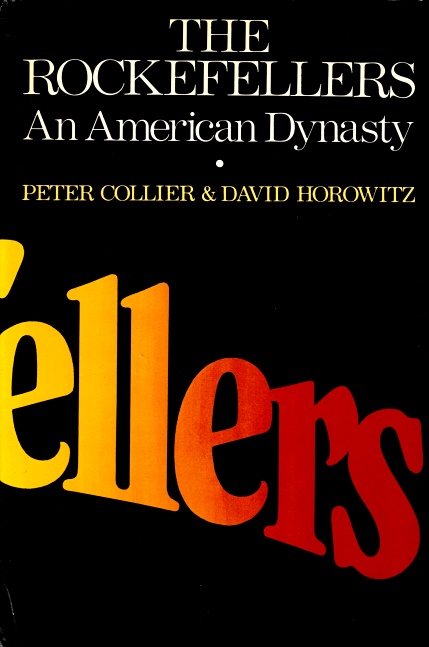
AUTHOR – PETER COLLIER & DAVID HOROWITZ
GENRE – Biography
YEAR PUBLISHED – 1976
PAGE COUNT – 746
READABILITY – Easy
MY RATING – 4/5
What to expect?
- The rise of John D Rockefeller’s Standard Oil
- Life of John D Rockefeller Jr. & his philanthropy
- Lives of all his sons & primary focus on Nelson Rockefeller & David Rockefeller
Peter Collier & David Horowitz’s The Rockefellers: An American Dynasty stands as a monumental achievement in investigative journalism. Published in 1976, the book provides a sweeping, critical portrait of America’s most recognizable financial dynasty. Notably, the authors were granted unprecedented access to the private archives & the younger, rebellious members of the family, allowing them to craft a deeply intimate narrative. Rather than merely recounting a timeline of corporate acquisitions, the authors delve into the complex burden of inheriting a name synonymous with capitalism itself. By structuring their narrative around successive generations, Collier & Horowitz illustrate how the nature of the family’s power evolved from raw industrial dominance into sophisticated, institutionalized global influence.
(This analysis is only focused on some members of the family)
John D. Rockefeller Sr.: The Creation of the Empire
The saga begins with the patriarch, John D. Rockefeller Sr, an enigmatic figure who permanently altered the American economic landscape. The authors detail how Senior built the Standard Oil monopoly with precision, utilizing secret railroad rebates, industrial espionage & predatory pricing to crush competitors. He accumulated a fortune of unprecedented scale, becoming the world’s first billionaire. However, this staggering success came at a steep public cost. Collier & Horowitz vividly capture how Senior became the ultimate symbol of the “Robber Baron” attracting ferocious public hatred & eventual antitrust intervention. To the public, he was a ruthless monopolist; to his family, he was a distant patriarch whose singular focus on wealth accumulation cast an inescapable shadow over all the generations that would follow.
John D. Rockefeller Jr: The Burden of the Name
The narrative shifts its focus entirely when examining the life of “Junior,” the sole heir to the massive Standard Oil fortune. The book portrays John D. Rockefeller Jr. as a man effectively crushed by the weight of his father’s controversial legacy. Driven by a profound sense of duty, moral anxiety & a desire to cleanse the family name, Junior dedicated his life to giving away the wealth his father had so ruthlessly gathered. Collier & Horowitz detail how Junior pioneered the concept of modern mega philanthropy. He was the driving force behind the Rockefeller Foundation, the restoration of Colonial Williamsburg & the monumental construction of Rockefeller Center. Yet, the authors critically examine how this philanthropy functioned as an effective public relations mechanism, transforming the Rockefellers from despised monopolists into respected benefactors. Junior’s life is depicted as an exhausting, solitary crusade to legitimize the family’s power, establishing a network of tax exempt foundations (Rockefeller Foundation) that ensured the Rockefellers would maintain control over their vast resources.
Nelson Rockefeller: The Political Ascent
The third generation, famously known as “The Brothers” marked the family’s aggressive expansion from private wealth into the public spotlight. Nelson Rockefeller emerges as the most charismatic & ambitious of the siblings. Rejecting the demeanor of his father, Nelson enthusiastically embraced his immense wealth & utilized it as a springboard for a formidable political career. The authors trace Nelson’s rise to become a dominant force in the Republican Party, serving four terms as Governor of New York & eventually becoming Vice President. The book meticulously documents how Nelson leveraged the family’s sprawling philanthropic networks to build an unparalleled political machine. Through Nelson, the family’s power mutated from corporate monopoly into direct political influence. Despite his vast resources, the book captures the tragic irony of Nelson’s political life: he was continually denied the one prize he believed was his birthright, the presidency of the United States.
David Rockefeller: The Global Banker
While Nelson sought power through the ballot box, his youngest brother David Rockefeller, conquered the globe through international finance. The book profiles David as the architect of the family’s modern global influence, serving as the chairman & chief executive of Chase Manhattan Bank. Under his leadership, the bank became an extension of the family’s international ambitions. Collier & Horowitz portray David operating almost like a stateless head of state. He traveled the world, meeting with prime ministers & monarchs, seamlessly blending American foreign policy with the corporate interests of Chase Manhattan. The authors highlight how David integrated the Rockefeller empire with the highest echelons of global capitalism. He was instrumental in establishing influential policy groups (like the Trilateral Commission & the Council on Foreign Relations) which the book presents as powerful mechanisms designed to foster a unified, global capitalist order. Through David, the dynasty achieved a level of international financial hegemony that their grandfather could not have imagined.
Conclusion
The Rockefellers: An American Dynasty is a masterful exploration of how unimaginable wealth shapes, isolates & ultimately burdens a family. The authors succeed in writing a narrative that is as much a psychological tragedy as it is a history of American capitalism. The book vividly charts the metamorphosis of power from John D. Sr.’s ruthless corporate monopoly, to Junior’s sanitizing philanthropy, to the political & financial supremacy achieved by Nelson & David. By charting this multi generational evolution, the authors provide a definitive account of how private wealth can shape public policy on a global scale. Ultimately, they present the Rockefeller dynasty not just as a family of billionaires, but as a formidable institutional force that fundamentally engineered the modern American state, leaving a legacy defined by both monumental historical achievement & profound personal alienation.