THE ROTHSCHILDS: A FAMILY PORTRAIT
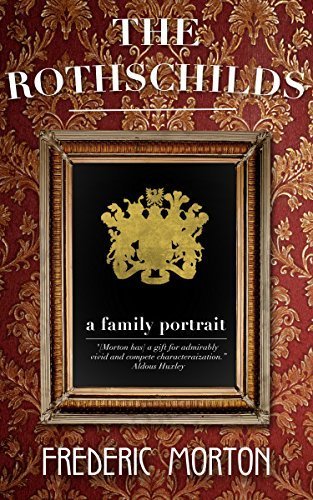
AUTHOR – FREDRIC MORTON
GENRE – Biography
YEAR PUBLISHED – 1998
PAGE COUNT – 335
READABILITY – Easy
MY RATING – 3.8/5
What to expect?
- How Amschel Rothschild set up his family?
- The Rothschild empire all over Europe
- How Rothschild manipulated the Napoleonic Revolution?
- The contribution of Rothschild in railroad construction
- Rothschild role in the creation of Israel
The Architecture of Financial Conquest
In Frederic Morton’s The Rothschilds: A Family Portrait, the legendary banking dynasty is depicted not merely as a family but as a ruthless, impenetrable machine of financial conquest. Morton’s text rips away the velvet curtains of European high society to reveal a clan that utilized elemental vigor, political manipulation & a shadowy network of intelligence to secure an absolute stranglehold over the Western world. The following is an analysis of the primary themes & historical milestones that defined their ascent.
The Five Flying Carpets: Spreading Across Europe The foundation of the Rothschild empire lay in the patriarch Mayer Amschel’s most potent weapon: his five sons. Recognizing that true power required geographic omnipresence, the family deployed these sons to the vital countries of Europe. Amschel remained to govern the founding house in Frankfurt; Salomon entered the aristocratic fortress of Vienna; Nathan navigated the financial hub of London; Kalmann (Carl) got himself in Naples & Jacob (James) took over Paris. Together, they formed an unassailable international network bound by blood, a secret Yiddish German code & a fleet of private couriers that outpaced the diplomatic pouches of the world’s greatest empires.
Profiting from the Napoleonic Wars The Rothschilds did not fight in Napoleon’s wars, they fed on them. When Napoleon’s blockade attempted to starve the Continent, Nathan Rothschild exploited the shortage by orchestrating a massive smuggling ring, flooding Europe with contraband cotton, sugar & indigo at famine prices. The family then executed one of the most audacious financial maneuvers in history: Nathan purchased £800,000 worth of gold in London & using his brother James in Paris, secretly smuggled the bullion right through Napoleon’s France to fund the British army fighting in Spain. The climax of their war profiteering occurred at Waterloo. A Rothschild agent delivered the news of Napoleon’s defeat to Nathan hours before the British government knew. Leaning against his pillar at the London stock exchange, Nathan immediately dumped his bonds, sparking a panic. Once prices hit rock bottom, he secretly bought back massive parcels, multiplying his fortune in a single day of orchestrated terror. This is pure cunning brilliance!
Bankers to Empires Following the wars, the Rothschilds transitioned from smugglers to the sovereign creditors of Europe, placing billions of dollars in foreign loans. They held the purse strings of the Austrian Empire, the French Bourbons & the Kingdom of Sardinia. Carl floated loans that kept the King of Naples in power & financed the Pope’s domains, earning him a papal decoration despite his strict adherence to Judaism. In London, Nathan revolutionized international finance by making foreign bonds payable in pounds sterling, effectively subjugating global debt to the British market & cementing his family’s absolute supremacy.
The Suez Canal Purchase By the late 19th century, Rothschild wealth was wielded as an instrument of statecraft. In 1875, British Prime Minister Benjamin Disraeli learned that the heavily indebted Khedive of Egypt was desperate to sell his shares in the Suez Canal. Parliament was in recess & the Bank of England could not legally provide the funds in time. Disraeli turned to Baron Lionel de Rothschild, asking for £4 million (roughly $44 million at the time). Eating muscatel grapes at his desk, Lionel agreed instantly. Within 48 hours, the Rothschilds provided the money, allowing the British Empire to snatch majority control of the globe’s most vital commercial lifeline right out from under the French.
Gold Speculation & Market Monopolies The family’s wealth was built on calculated market manipulation. Nathan Rothschild was a predator in the gold market, darting in & out with tens of thousands of pounds to speculate on bullion. He cornered the market by buying the East India Company’s massive gold reserves simply because he knew the Duke of Wellington would be forced to buy it from him. The family also sought total monopolies over other vital resources. Through a complex series of transactions, Salomon obtained the lease for Austria’s immense mercury mines; simultaneously, Nathan negotiated for the Spanish mines, the only other known source. Together, they secured a worldwide monopoly on mercury, allowing them to fix its price at will.
Laying the Railroads The Rothschilds literally laid the iron tracks of the industrial revolution, forcing railroads upon Europe. In Austria, Salomon faced violent public backlash including claims by medical “experts” that the speed of trains would cause human lungs to collapse & blood to spurt from passengers’ faces. Bypassing the hysteria, Salomon manipulated the Emperor into lending his name to the “Kaiser Ferdinand Nordbahn” mainland Europe’s first major railway line. In France, James fought off reactionary politicians & rival bankers to build the Chemin de Fer du Nord, linking Paris to the northern industrial zones.
Zionism, the Balfour Declaration & Israel Despite the family’s official stance as assimilated European citizens, the youngest Parisian brother, Edmond de Rothschild became the driving, autocratic force behind the colonization of Palestine. Known as the “Anonymous Benefactor”, Edmond secretly poured tens of millions of francs into purchasing land, draining swamps & establishing agricultural & industrial colonies in the Holy Land. He purchased their entire harvests to prevent bankruptcy & ensuring they were strategically placed for military defense. Though he clashed bitterly with official Zionists, his colonies became the bedrock of the future state of Israel. Decades later, the British government’s official support for a Jewish national home was enshrined in the 1917 Balfour Declaration which is a document addressed directly to Lionel Walter, Lord Rothschild.
Rothschild Versus Hitler While the excerpted text concludes before detailing the events of the 1930s, it heavily foreshadows the dynasty’s inevitable collision with the Third Reich. The book’s table of contents maps out a final, violent confrontation in a chapter titled “Hitler Versus Rothschild,” featuring subheadings like “The Ides of March,” “Hermann Göring Says Hello,” & “Heinrich Himmler Says Hello”. Morton notes early on that the family’s immense industrial holdings, specifically Salomon’s purchase of the Vitkovitz coal & iron works in Silesia, were destined to “produce dramatic repercussions” under Adolf Hitler
Conclusion
Frederic Morton’s opened the 19th century European history to reveal a continent covertly engineered by a single family’s relentless pursuit of power. Born in the oppressive confines of a Frankfurt ghetto, the clan transformed itself into a multinational leviathan that fed equally on the triumphs & the bloodletting of warring empires. By treating monarchs as mere steppingstones & national debts as lucrative commodities, they dictated the infrastructure, the borders & the geopolitical lifelines of the modern world. Their story is a testament to the absolute supremacy of wealth, illustrating how carefully orchestrated capital can conquer the globe more thoroughly than any invading army. In the end, the Rothschilds proved that while chancellors, dictators & imperial dynasties inevitably crumble into dust, their union of blood and gold endures.
P.s: Totally not a fan of Morton’s writing style