EPISTEMOLOGY
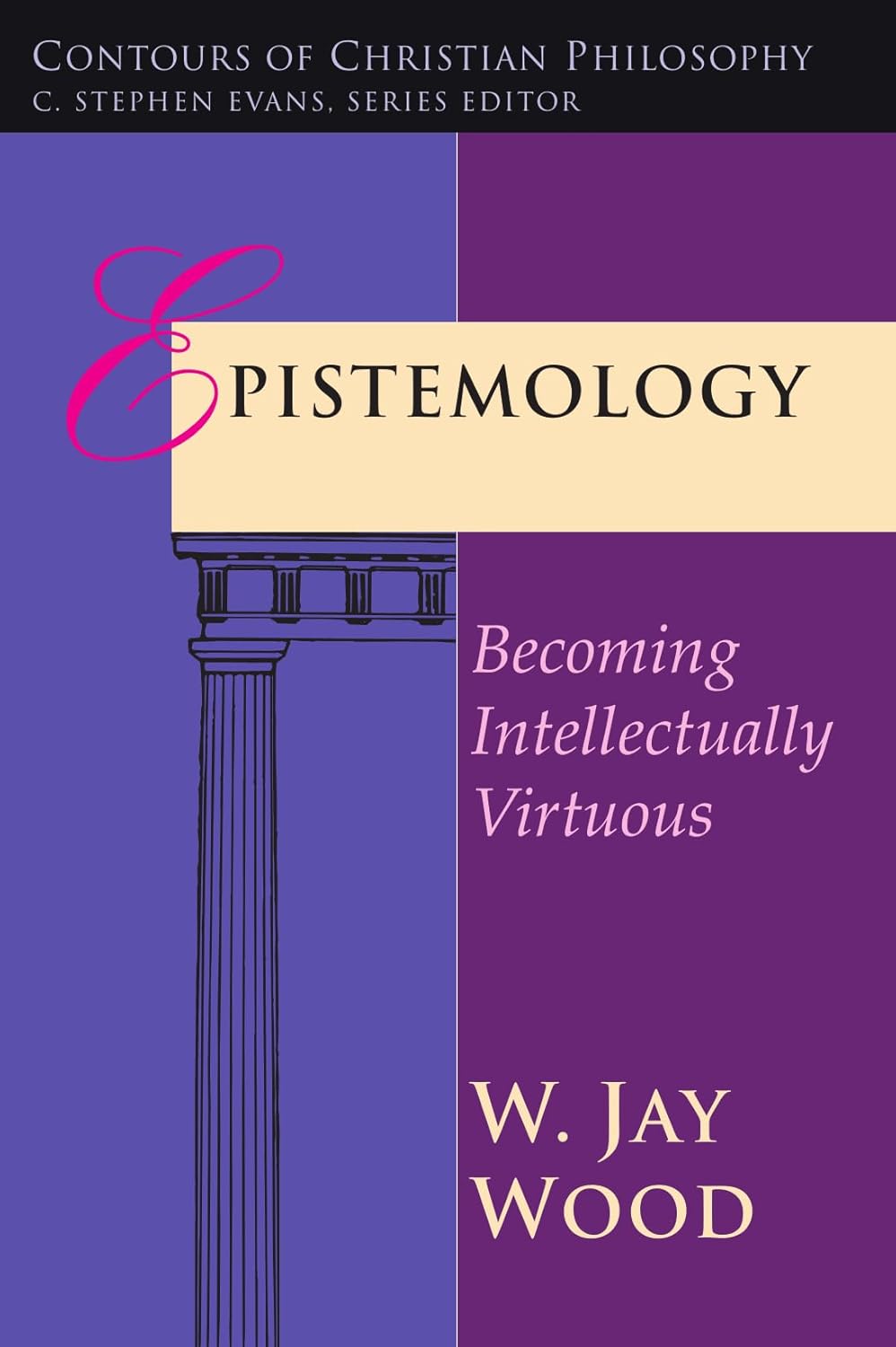
AUTHOR – W.JAY WOOD
GENRE – Philosophy
YEAR PUBLISHED – 1998
PAGE COUNT – 216
READABILITY- Easy
MY RATING – 4.5/5
What to expect?
- This is aimed recommended & undergraduates
- Topics wont be in detail as they are just introductory
- Wood discusses about why Justification is necessary in any kind of belief (Important)
- This book is written in a Christian perspective
W. Jay Wood’s Epistemology: Becoming Intellectually Virtuous published by InterVarsity Press in 1998, begins from a different & more interesting angle. It asks not merely what knowledge is but what kind of person one needs to become in order to know well. That shift in emphasis from epistemology as a theory of justified belief to epistemology as a matter of intellectual character.
The Nature of Epistemology
Wood opens by asking when epistemological questions actually arise in ordinary life & not in philosophy seminars but in the moments when we find ourselves uncertain, challenged or simply curious about whether what we believe is true. From this practical starting point he introduces the connection between epistemology & the pursuit of intellectual virtues, arguing from the outset that the Christian intellectual tradition has resources for thinking about knowledge that secular epistemology has largely ignored. The question is not merely whether beliefs are justified but whether the people holding them are exercising the cognitive responsibilities that good thinking requires.
Exploring & Examining the Intellectual Virtues
The 2nd chapter maps the landscape of intellectual virtue by distinguishing types of intellectual virtue, examining their structure & connecting epistemology, virtue & moral responsibility. Wood draws on Aristotle’s account of virtue as a stable disposition & applies it to the cognitive life. The 3rd chapter then examines specific virtues in extended detail. Studiousness & its corrupt counterpart vicious. Intellectual honesty & dishonesty are examined with particular sharpness: Wood shows that the failure to proportion belief to evidence is not merely a cognitive error but a moral failing. Wisdom & folly round out this section along with a substantial discussion of how ancient & modern epistemological concerns relate to & illuminate each other. This cross historical perspective is one of the book’s genuine strengths & Wood refuses to treat contemporary analytic epistemology as if it invented its questions from scratch.
Foundationalism
Chapter 4 addresses foundationalism i.e the view that our beliefs form a structure in which some beliefs serve as foundations, justified independently of other beliefs, while all other beliefs ultimately derive their justification from these foundations. Wood traces the motivation for foundationalism, distinguishes strong from modest versions & examines the serious problems that strong foundationalism faces particularly the difficulty of identifying beliefs that are truly self evident or incorrigible. Modest foundationalism, which relaxes the requirements on basic beliefs while retaining the structural insight, is presented as the more defensible position. This chapter gives the reader a reliable map of one of the central debates in modern epistemology.
Epistemic Justification
Chapter 5 examines the three major theories of epistemic justification. Evidentialism holds that a belief is justified if and only if it is proportioned to the evidence available to the believer. Coherentism holds that beliefs are justified not by foundational anchors but by their coherence with the overall web of one’s beliefs & no belief stands alone but each derives justification from its fit with the whole. Wood gives particular attention to Keith Lehrer’s coherence theory, one of the most sophisticated versions of coherentism developed in contemporary epistemology.
Reliabilism & the Internalism-Externalism Debate
Chapter 6 covers reliabilism i.e the view that a belief is justified if it is produced by a cognitive process that reliably produces true beliefs & the broader debate between internalism & externalism about justification. Internalists hold that justification depends only on factors internal to the believer’s mind & their evidence, their reasoning, their conscious states. Externalists hold that factors outside the believer’s awareness such as the reliability of their cognitive faculties can contribute to justification. Wood connects this debate explicitly to virtue epistemology showing how the virtue framework offers a distinctive way of navigating between the two positions.
Epistemology and Religious Belief
Chapter 7 is the most distinctive section of the book and the one most shaped by Wood’s intellectual context. He examines how both internalist & externalist frameworks bear on the justification of theistic belief before giving extended treatment to Reformed Epistemology & the position associated with Alvin Plantinga & Nicholas Wolterstorff that belief in God can be properly basic, justified without inference from other beliefs, in the same way that perceptual beliefs are basic. Wood neither simply endorses nor dismisses this position but presents it with the seriousness it deserves as one of the most carefully developed positions in contemporary philosophy of religion.
The Role of Emotions in Cognition
The final chapter is perhaps the most original in the book & the most neglected in standard epistemology courses. Wood examines the role of emotions in intellectual life not as threats to clear thinking but as potential contributors to it. Emotions, he argues, can assist good thinking by directing attention, motivating inquiry & making certain truths accessible that purely detached reasoning might miss. The relationship between emotions, intellectual virtues & religious belief is examined with particular care & the chapter closes with a discussion of transformative emotional experiences that genuinely change what a person is able to know and how they are able to reason.
Conclusion
Epistemology: Becoming Intellectually Virtuous covers more ground than its modest size suggests. It is reliable on the standard epistemological debates like foundationalism, coherentism, reliabilism, the internalism externalism controversy while consistently situating these technical questions within the broader framework of intellectual character and responsibility. The question it leaves the reader with is not merely whether their beliefs are justified but whether they are becoming the kind of person whose beliefs can be trusted & whether they are taking seriously the work that requires.