DICTIONARY OF DIETIES & DEMONS IN THE BIBLE
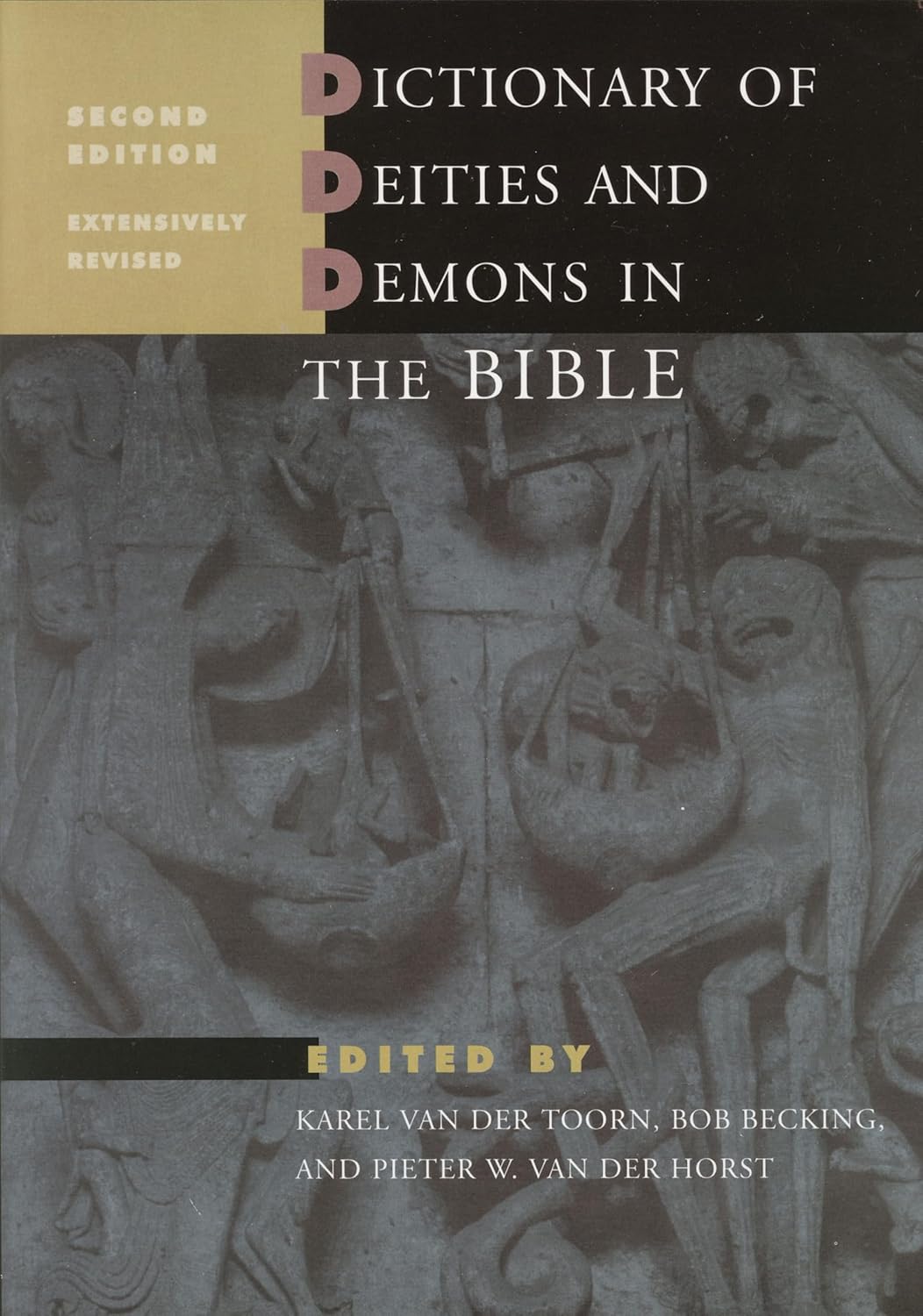
AUTHOR – KAREL VAN DER TOORN, BOB BECKING,PIETER VAN DER HORST
GENRE – Academic Biblical Studies
YEAR PUBLISHED – 1998
PAGE COUNT – 962
READABILITY- Hard
MY RATING – 4.8/5
What to expect?
- Origin of all deities/demons in Bible
- Their Ancient Near Eastern (ANE) context
- Consensus of Scholars
- Best Scholarly reference book
Unearthing the Polytheistic Context
To the modern reader, the Bible is strictly viewed as a monument of monotheism. However the ancient Israelites did not live in a historical vacuum. They were surrounded by powerful civilizations such as the Babylonians, Egyptians, Canaanites, Hittites & later the Greeks & Romans who possessed rich, complex pantheons of gods, goddesses & spiritual entities. The Dictionary of Deities &Demons in the Bible edited by Karel van der Toorn, Bob Becking & Pieter W. van der Horst is an extraordinary, comprehensive reference work designed to illuminate this ancient spiritual world. Rather than analyzing the Bible through a later theological lens, this volume uses rigorous historical critical methodology & archaeology to identify & catalog every single divine or demonic entity mentioned, alluded to or hidden within the biblical text.
Scope, Structure & Academic Rigor
The second edition of the DDD is an extensively revised & expanded work containing over 400 articles written by more than a hundred international scholars. Each entry is not a simple definition but a deeply researched academic essay broken down into four consistent sections:
- The Name: A linguistic analysis of the entity’s name, exploring its etymology & roots in ancient languages (such as Hebrew, Ugaritic, Akkadian or Greek).
- The Cult: A historical evaluation of how & where the deity was worshipped outside of Israel, drawing data from extra biblical myths, temple inscriptions & archaeological discoveries.
- The Biblical Witness: A meticulous breakdown of where & how the entity appears in the Hebrew Bible (Old Testament), the Apocrypha & the New Testament.
- Bibliography: A curated list of primary sources & secondary academic literature for further research.
Major Theme 1: The Evolution of Israelite Monotheism
One of the most important contributions of the DDD is how it traces the historical transition of Israel from henotheism (worshipping one local God while acknowledging the existence of others) to absolute monotheism (believing only one God exists).
The dictionary features extensive, groundbreaking entries on the names of the Israelite God such as Yahweh, El & Elohim. By comparing biblical poetry with 14th century BC texts discovered at Ugarit (ancient Syria), the entries show that many titles & attributes originally belonging to the Canaanite high god El or the storm god Baal (such as “Rider on the Clouds”) were historically absorbed by the writers of the Old Testament & attributed exclusively to Yahweh. The book demonstrates that the strict monotheism we read today was forged over centuries of intense theological struggle against neighbouring fertility cults.
Major Theme 2: Unmasking Hidden Deities
For the layperson, many deities in the Bible are masked by English translations. The DDD performs an invaluable service by unmasking these figures. For example, when English Bibles translate words as abstract concepts like “Pestilence” or “The Plague” (as seen in Habakkuk 3:5), the DDD reveals that the original Hebrew text is actually invoking Resheph & Deber i.e ancient Canaanite gods of destruction & under world plagues whom the biblical writers reframed as subservient military escorts marching alongside the Israelite God.
The volume provides similarly brilliant, exhaustively detailed entries on famous foreign deities like Baal, Asherah (the Canaanite mother goddess), Moloch (associated with child sacrifice) & Dagon (the Philistine deity) explaining their authentic religious roles before they were polemically demonized by biblical prophets.
Major Theme 3: The Changing Face of Demonology
The dictionary tracks a distinct shifts in how ancient peoples viewed the demonic realm. In the older layers of the Old Testament, there is very little concept of an independent “Devil” fighting against God. Entities like Azazel (the wilderness demon associated with the scapegoat ritual in Leviticus) or Lilith (the night demon) are viewed as chaotic forces of nature or functions of the wilderness.
However as the dictionary moves chronologically into the Intertestamental Period & the New Testament, the entries track a massive explosion in demonology influenced by Persian Zoroastrianism & Greek thought. Entries on Satan, Beelzebul & Asmodeus illustrate how separate chaotic forces were eventually synthesized into a unified empire of cosmic evil led by a singular dark antagonist, setting the stage for the spiritual warfare narratives found in the New Gospels & the Book of Revelation.
Conclusion
Ultimately, the Dictionary of Deities & Demons in the Bible is an indispensable masterpiece of historical scholarship. It does not treat the ancient Near East as a background prop for the Bible but rather it treats the Bible as a product of the ancient Near East. By restoring these forgotten gods, goddesses & monsters to their original cultural context, Van Der Toorn, Van Der Horst & Becking provide modern students of history & theology with the ultimate key to understanding the raw, colorful & highly contested spiritual landscape out of which Western monotheism was born. (This resource reflects critical scholarship rather than evangelical perspectives. It’s best suited for readers familiar with critical methods, but it remains one of the most comprehensive resources available, with content often found only in advanced academic books and journals.)
This is a dictionary & not a cover to cover read