PAUL: A BIOGRAPHY
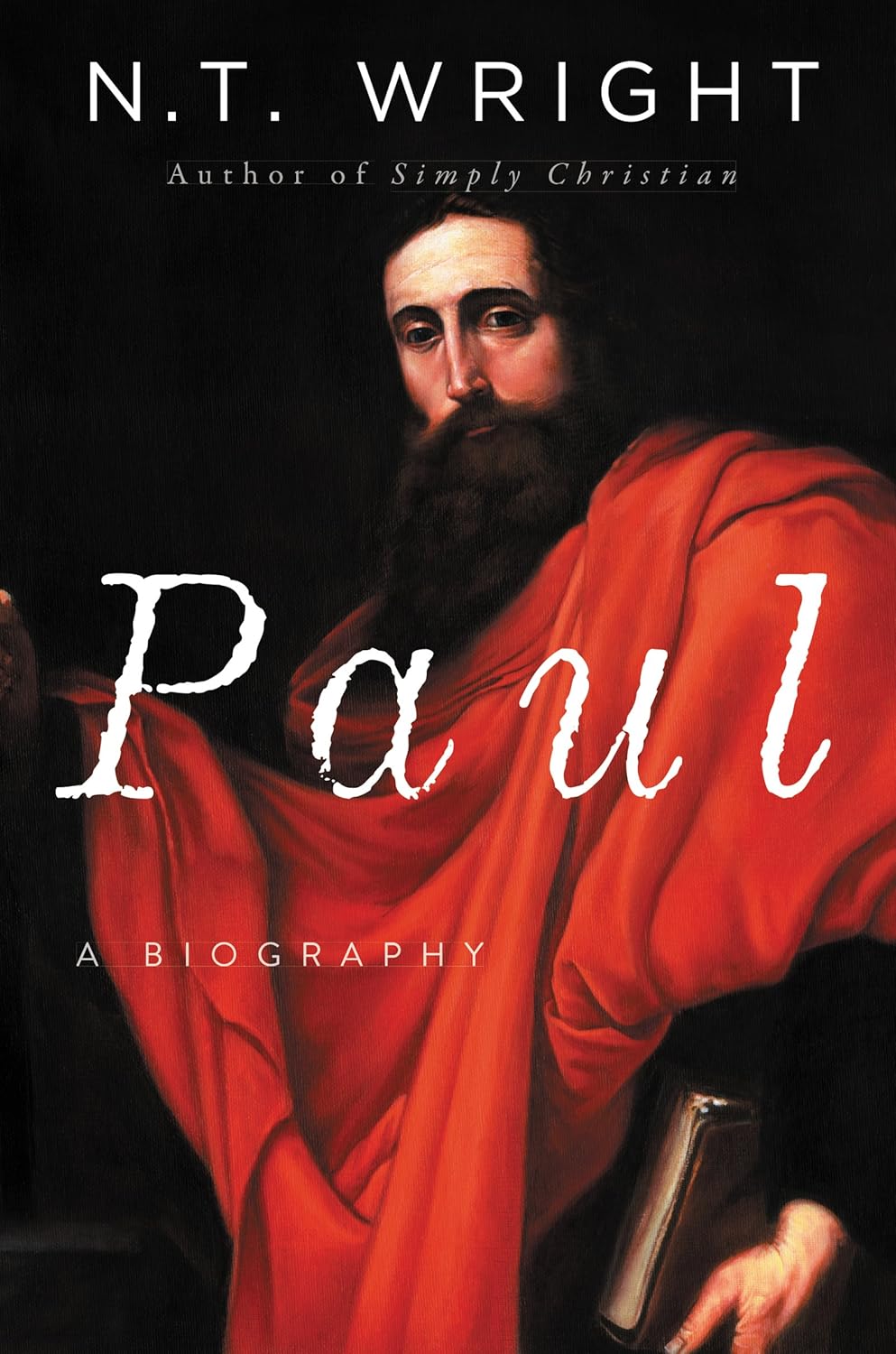
AUTHOR – N.T WRIGHT
GENRE – Biography
YEAR PUBLISHED – 2020
PAGE COUNT – 480
READABILITY- Easy
MY RATING – 4.4/5
What to expect?
- Apostle Paul’s life & legacy
- All his visit to different regions
- What was Paul’s theology?
- His different approach to different groups of people
The Architect of a New Humanity
Writing a biography of an individual whose entire surviving written output could fit comfortably onto fewer than eighty pages is a unique challenge. Yet when that individual is Saul of Tarsus later known as Paul the Apostle, those few pages have sparked centuries of intense debate, countless sermons & academic monographs. Paul: A Biography offers a sharp, deeply contextualized examination of this monumental historical figure. Rather than treating Paul as an isolated theological voice, the author N.T Wring anchors his worldview within a vivid, tension filled collision of three distinct cultures: Jewish scriptural devotion, Greek intellectualism & Roman political supremacy. The book constructs its biographical portrait of Paul by breaking down his life, driving motivations & revolutionary social impact into several foundational themes:
A Collision of Worlds
The biography begins by establishing the unique environment of Paul’s upbringing in Tarsus, a bustling city in modern day Turkey. Far from a provincial backwater, Tarsus was a major center of culture, politics & philosophy that rivalled Athens. It was a city recognized by the likes of Julius Caesar & Alexander the Great where Roman citizens lived alongside an active intellectual community. Born into this world as a Roman citizen by birth, Paul was raised by parents who were strict Pharisees. He grew up speaking Hebrew, Aramaic & Greek, fluidly navigating both the ancient stories of Israel & the nuances of Hellenistic philosophy. This multi layered identity provided him with the rare cultural vocabulary necessary to later bridge the deep chasm between the Jewish world & the wider Greco Roman Empire.
The Anatomy of Zeal & Persecution
To understand why Paul initially persecuted the early Christian movement, N.T Wright takes a deep dive into the concept of religious “zeal” within the context of first century Judaism. Under Roman occupation, the Jewish people felt like slaves in their own land, longing for a new Exodus. The prevailing theological conviction among Pharisees was that Israel’s God would only return in glory to establish His kingdom if the people kept the Torah with flawless, rigorous attention to detail, protecting it from all pagan corruption. Central to this identity was the Shema: the foundational declaration of loyalty to the One God. In a world that demanded submission to Caesar, Jewish distinctiveness in everything from worship to dietary laws was a fierce political & spiritual battleground. The text clarifies that young Saul did not hunt down Jesus’s early followers out of mindless cruelty; rather he did so out of an intense, protective “zeal” for the law, viewing this new sect as a dangerous threat to Israel’s covenant purity.
The Structural Backbone of the Church
Once Paul experienced his radical transformation, his intense zeal did not vanish; it was completely redirected. The text emphasizes that Paul was a leader of extraordinary grit & vision. A man who would directly confront local authorities, tirelessly persuade his co workers & actively “take the bull by the horns” to advance his mission. Crucially, the biography notes that theology was the absolute “backbone” of Paul’s strategy. Without a rigorous well defined theological framework, the fragile, newly formed communities would not survive the intense cultural & political pressures surrounding them. Paul’s letters were not abstract academic exercises; they were the essential structural support system built to keep a counter cultural movement alive.
The Invention of a New Kind of Humanity
The most culturally explosive aspect of the biography is its description of the practical, social reality generated by the Gospel. Paul did not merely preach a system of belief; he sought to bring to birth a completely new kind of human community designed specifically for “good works”.
The text vividly illustrates this by contrasting early Christian behavior with the harsh realities of the ancient world:
- Radical Social Care: In antiquity, medical care was an expensive luxury reserved almost exclusively for the wealthy. Within a few generations however, Christian communities were actively setting up hospitals & caring for anyone within their reach.
- Sacrificial Compassion: When devastating plagues struck ancient towns, the wealthy & respectable citizens routinely fled to their isolated country estates to escape infection. The Christians, conversely chose to stay behind to nurse the sick often at the direct cost of their own lives.
- Obsolete Jewish Tradition: It was Paul who defended the view that the newly formed “Believers” need not circumcise & true faith lies in our actions & renewal of our heart. This is precisely why Christians unlike Jews or Muslims have no affinity to follow the Levitical laws.
This lifestyle marked by commands to remember the poor, love one’s neighbors, mourn with the broken hearted & shine like the light was entirely unprecedented. Nobody in the Greco Roman world had ever dreamed of living this way before. The text highlights that the Gospel was explicitly engineered to create a people who were eager to do good, transforming the social fabric of the empire from the bottom up.
Conclusion
This book by N.T Wright is an exceptional resource to understand the life of St.Paul. It skillfully avoids the common trap of reducing Paul to a dry, one dimensional historical figure. Instead it captures the raw, human energy of a man driven by a radical vision while offering profound insights into the explosive, practical birth of the early church. It serves as a powerful reminder that the theological concepts Paul championed were ultimately meant to flesh themselves out in a revolutionary, deeply compassionate way of life.