THE MYSTICAL THEOLOGY OF THE EASTERN CHURCH
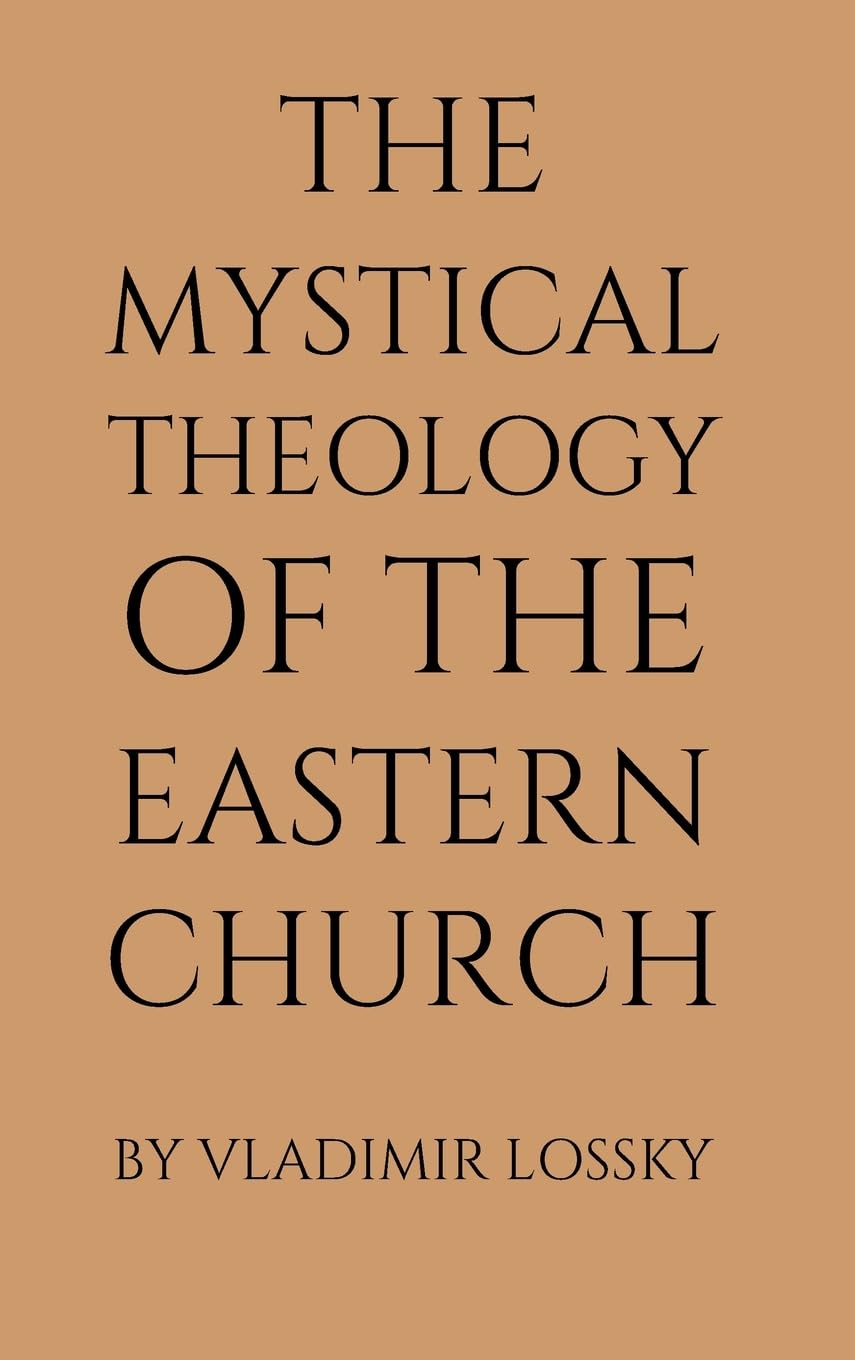
AUTHOR – VLADIMIR LOSSKY
GENRE – Christian Theology
YEAR PUBLISHED – 1944 / 2022
PAGE COUNT – 200
READABILITY – Moderate
MY RATING – 4.8/5
What to expect?
- The unfamiliar Christian Theology from the Greek Church
- How Greek Orthodox view God?
- Can we truly know who God is?
- How God reveals himself to us?
- All these topics are shown in a new light from the Eastern Church
The Mystical Theology of the Eastern Church by Vladimir Lossky
Vladimir Lossky’s The Mystical Theology of the Eastern Church gives us a real view into what Eastern Orthodoxy IS. First published in French in 1944 & translated into English in 1957.It remains to this day the single most important introduction to Orthodox Christian theology available in the Western world. This is a book that takes its subject with complete seriousness & in doing so gives the reader something genuinely rare: A theological tradition that has been thinking deeply about God, human nature & the cosmos for nearly two thousand years largely unknown to most Western readers.
The book’s opening claim sets the tone for everything that follows. Eastern Christianity has never drawn a sharp line between theology & mysticism. In the West, its shaped heavily by Scholasticism & legal categories. The theology became an academic discipline & mysticism a specialized pursuit for monks. In the East these were never separated. Every theological statement is simultaneously a statement about the experience of God. If you cannot live it, you have not yet understood it. The is the central theme of the Greek Church as opposed to the Latin Church (esp. after Scholasticism)
God Who Cannot Be Named
The book’s second chapter introduces what Lossky considers the foundation of all Eastern theological method i.e Apophatic or negative theology. The idea is straightforward in understanding. God is fundamentally unknowable. Not merely difficult to understand but unknowable by nature. Every positive statement we make about God, that He is good, wise, powerful, loving says something true about how God relates to us but says nothing about what God actually is in Himself. The proper response to the divine mystery is ultimately silence & unknowing. Moses entering the dark cloud on Sinai is the paradigmatic image: God is encountered not in clear vision but in darkness, in the surrender of all concepts. This is not agnosticism. It is the opposite i.e the position that God is so utterly beyond human thought that any concept we form about Him inevitably falls short. Apophaticism, Lossky insists is not a theology of ecstasy. It is above all an attitude of mind that refuses to form idols out of concepts.
The Trinity: Starting from the Persons
From this foundation, Lossky moves to the Trinity (the chapter most likely to challenge Western readers). The Eastern tradition begins not with the one divine essence & moves to the three Persons but the reverse. It begins with three Persons : Father, Son & Holy Spirit then arrives at the one nature they share. The Father is the personal source, the origin from whom the Son is eternally begotten & the Holy Spirit eternally proceeds. This difference in starting point has enormous implication. Lossky argues it is the root cause of the great schism between East & West plus the Filioque controversy, in which the Western church added to the Creed that the Holy Spirit proceeds from both the Father & the Son. For the Eastern tradition, this addition fundamentally undermines the monarchy of the Father by introducing two principles of Godhead or reducing the Persons to mere relations within an impersonal essence.
Uncreated Energies: How God Gives Himself
The chapter on uncreated energies is where the book becomes most distinctly Eastern. Lossky presents the distinction, defended by Gregory Palamas in the fourteenth century between God’s essence (absolutely unknowable & incommunicable) & God’s energies, which are not created effects but uncreated divine operations through which God genuinely gives Himself to creation. This is not a division in God but it is the only way of holding together two things the tradition insists on simultaneously: that God is utterly beyond all participation & that genuine union with God is the actual destiny of every human being. Without this distinction, real deification is impossible. Palamas faced fierce opposition from western influenced theologians like Barlaam of Calabria who accused him of introducing division into God. Lossky shows that the accusation misses the point entirely & it is precisely the essence energy distinction that protects the mystery while making genuine communion possible.
Creation, Divine Ideas & Synergy
The chapter on created being is one of the most overlooked but most important in the book. Creation is not coeternal with God as it is a free act of the divine will, not a necessity of the divine nature. This distinguishes the Eastern view sharply from both Neoplatonism & certain strands of Western theology. Crucially, the Eastern tradition locates the divine ideas i.e the eternal archetypes of creatures which is not in the divine essence as Augustine & Aquinas taught but in the divine energies. It means that the eternal patterns according to which creation exists are themselves uncreated expressions of God’s free will & not determinations of His essence.
Equally important is the concept of Synergy which is perhaps the most misunderstood aspect of Orthodox theology. God offers His grace freely & universally but He cannot save a person without their cooperation. Lossky states plainly: “God created man by His will alone but He cannot save him without the co operation of the human will.” This is the Eastern answer to both Calvinist determinism & Pelagian self sufficiency. Grace is real, primary & divine but the human will must freely receive & cooperate with it. Salvation is a genuine partnership between uncreated grace & created freedom.
The Human Person: Nature & Individuality
The chapters on the image & likeness of God contain one of the book’s most original contributions which is the distinction between human nature & human person. All human beings share one nature but each is a unique, irreducible person. The Fall did not destroy human nature but it shattered the unity of that shared nature into competing, self enclosed individuals. What was meant to be a communion of persons in one nature became a collection of isolated individuals each grasping for their own survival. Redemption accordingly is not merely forgiveness but it is the restoration of this original unity. The person finds its fullest expression not by asserting individuality but by giving itself freely for others, reflecting the Trinitarian life in which each Person exists entirely for the others.
The Virgin Mary: Consent, Freedom & the Incarnation
Lossky gives significant attention to the role of the Theotokos “the God bearer” in a way that surprises many Western readers. The East rejects the Roman Catholic doctrine of the Immaculate Conception not because it diminishes Mary but because it separates her from the rest of humanity. Instead the Eastern tradition sees her holiness as the culmination of a long providential process of purification running through the entire Old Testament lineage. More important still is the theme of her free consent. The Incarnation was not imposed upon her. As Nicolas Cabasilas writes, cited by Lossky: “without the agreement of the Virgin Mary’s faith, the plan was as unrealizable as it would have been without the intervention of the three divine Persons Themselves. Her willingness to bear God is itself a theological statement about human freedom & grace does not override the will, it invites it”
Evil, the Will & the Demonic
One of the most main sections of the book concerns the nature of evil & its cosmic dimensions. Evil, for the Eastern Fathers is not a nature or a substance. It is a condition of the will specifically, the will’s turning away from being toward non being, from God toward nothingness. It has no independent existence. It subsists only in the will that chooses it. Before it entered human history through Adam, evil had already begun in the spiritual world through the rebellion of angelic beings whose wills became permanently fixed in rejection of God. St. Seraphim of Sarov, describes these beings with striking directness: As angelic creatures they possess enormous strength & the least among them could destroy the earth if not restrained by divine grace. Their goal is not dramatic cosmic confrontation but the subtle work of turning human freedom toward evil from within. This cosmic dimension of spiritual warfare rarely discussed in Western theology.
The Incarnation, Kenosis & Deification
The final chapters on the economies of the Son & the Holy Spirit bring all these threads together. The Incarnation is not primarily understood in legal terms as a debt payment or a satisfaction of divine justice but as an ontological event. God entering created nature in order to heal it from within, restore the broken will & reopen the path to deification. The Kenosis “the self emptying of the divine Person” is not an impoverishment of God but the supreme expression of what personhood means. The Resurrection, Pentecost & the ongoing life of the Church are not separate episodes but successive moments in the single divine movement of restoration. The Holy Spirit personalizes what Christ accomplished universally, making the grace of deification the actual possession of each individual person within the Body of Christ.
Conclusion
The Mystical Theology of the Eastern Church is not an easy read but for any serious reader interested in Christian theology, church history or the history of ideas, it is simply Amazing. It presents a vision of God, humanity & salvation that is coherent, ancient & inexhaustible & one that the Western world has largely forgotten it ever lost.