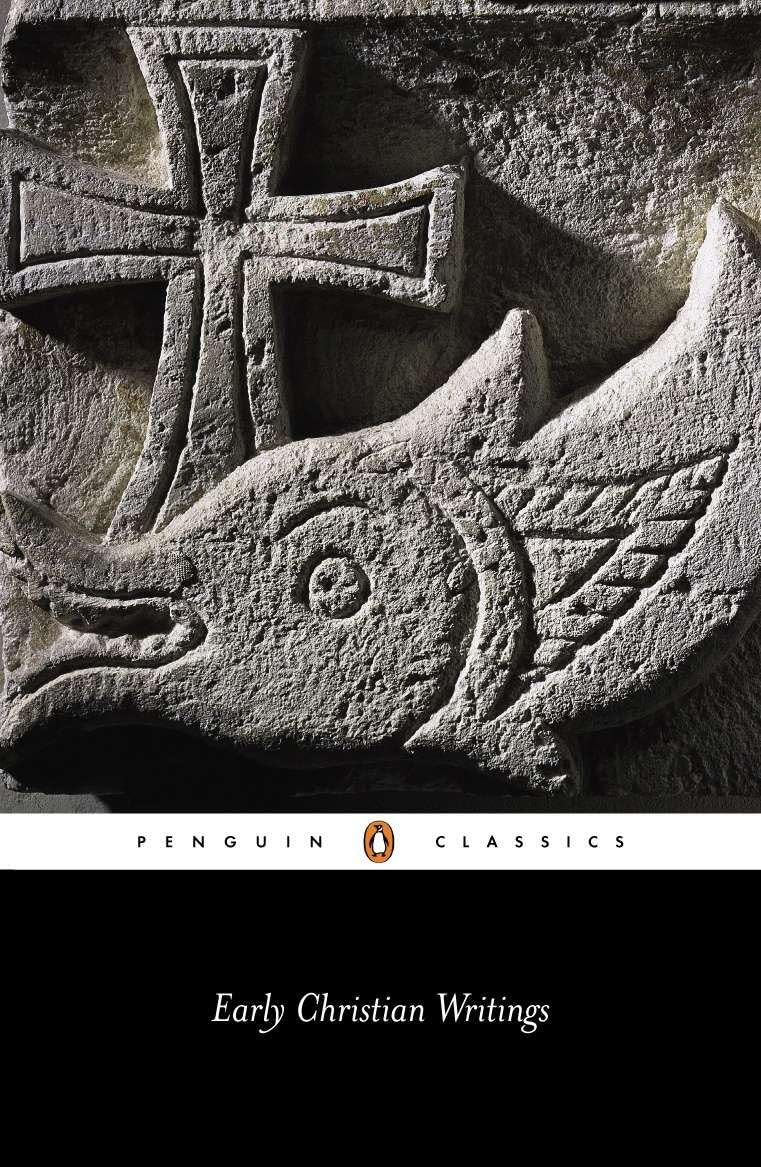
EARLY CHRISTIAN WRITINGS
TRANSLATORS – MAXWELL STANIFORTH / ANDREW LOUTH
GENRE – Patristics
YEAR PUBLISHED – 1987
PAGE COUNT – 208
READABILITY- Easy
MY RATING – 4.5/5
What to expect?
- Early Writings of Apostolic Fathers
- Early Church History
- The Martyrdom of early Christians
- The Didache (Teachings of the Apostles)
The Post Apostolic Landscape and the Ecclesial Structure
The study of early patristic literature outside the New Testament canon reveals a nascent Christian community actively wrestling with institutional identity, martyrdom & theological boundaries. The documents compiled in this collection represent the foundational shifts occurring from the late first century through the mid second century as the Church transitioned from an apostolic eye witness era to a sustained institution. Rather than presenting a uniform, abstract system of dogma, these epistles, treatises & martyrdom accounts provide a raw, practical window into how the early Church established authoritative leadership structures, distinct moral patterns & an enduring theology of suffering.
First Clement & the Restoration of Order
The First Epistle of Clement (AD 96) stands as one of the earliest extant Christian writings outside the New Testament. Written by Clement, a Greek speaking Roman identified within reliable historical lists as an early Bishop of Rome, the document addresses a specific crisis of leadership & rebellion within the church at Corinth. The text establishes a rigid baseline for church order, explicitly demonstrating that the Christian ministry stands within an unbending line of apostolic succession. Clement alternates his terminology referring to the church overseers interchangeably as bishops (episkopoi), deacons (diakonoi) & presbyters (presbyteroi) yet his structural argument remains consistent: the local congregation does not possess the authority to arbitrarily depose leadership established through the apostolic lineage.
Clement’s Ecclesial Framework
God ──> Jesus Christ ──> Apostles ──> Bishops/Presbyters
Methodologically, Clement addresses the classic theological tension between reconciling justification by faith with the absolute necessity of good works. He resolves this by appealing heavily to the character of God & ancient scriptural exemplars. He cites the figure of Rahab, framing her protection of the Israelite spies & the hanging of the scarlet cord not merely as an act of hospitality but as an explicit, early prophecy of the redemption brought through the blood of Jesus. Furthermore, Clement uses linguistic corrections from the Septuagint to reinforce God’s sovereign care over his people. In quoting Deuteronomy 32:8, he preserves an older textual reading indicating that while Gentile nations were assigned specific angels as their guardians, God reserved Israel as his personal portion.
Ignatius of Antioch: Christology, Judaism & the Philosophy of Martyrdom
Writing between A.D. 98 & 117, Ignatius, the third Bishop of Antioch following St. Peter, provides a starkly dramatic look at the reality of early Roman persecution. Condemned to face death by wild beasts in Rome. Ignatius penned seven letters during his journey to the imperial capital under military guard. His writings heavily emphasize structural loyalty, warning the churches of Trallia & Magnesia to avoid following private individual judgments and to remain anchored to Jesus Christ, the bishop & the Apostolic Institution.
Ignatius’s letters serve as a dual polemic against two distinct theological threats: Judaizing practices and Docetism.
- The Critique of Judaizing Trends: In his letters to the Magnesians and Philadelphians, Ignatius forcefully argues against syncretism. He asserts that continuing to practice Judaism while professing Jesus Christ is a fundamental absurdity, stating that the Christian faith does not look backward to Judaism, but rather Judaism looks forward to Christianity.
- The Refutation of Docetism: Addressing the Smyrnaeans, Ignatius combats early docetic or “atheist” viewpoints which suggested that Jesus only seemed to have a physical body. Ignatius insists on the absolute reality of the fleshly incarnation, passion & bodily resurrection. He reminds his audience that post-resurrection, Jesus openly invited Peter and the disciples to handle his physical hands and feet to prove he was not an incorporeal spirit.
Ignatius’s christological formulations are highly advanced, famously describing Jesus as the “Word of His own from silence proceeding”. This high Christology directly fuels his intense desire for martyrdom. Begging the church in Rome not to interfere or perform any “untimely kindness” by attempting to secure his release, Ignatius expresses a passionate theology of sacrifice, writing that he desires to become a meal for the wild beasts as they are the exact mechanism that will provide his way to God.
Polycarp of Smyrna and Early Martyrdom Traditions
Polycarp of Smyrna serves as a vital historical bridge between the apostolic age & the mid second century Church. Validated by traditions in Tertullian & Irenaeus, Polycarp was a direct disciple of St. John the Apostle, making his testimony highly valued as a living link to the eyewitnesses of Jesus. His absolute intolerance for heresy is famously captured in his encounter with Marcion in Rome, whom Polycarp openly denounced as “the first born of Satan”.
The text detailing The Martyrdom of Polycarp outlines the brutal landscape of imperial suppression. It describes the public execution of the noble Germanicus who willingly provoked the wild beasts to escape an impious world, an act that triggered the pagan crowd to demand the capture of Polycarp. Polycarp’s arrest is marked by prophetic awareness; three days prior, he envisioned his pillow consumed by fire & ashes, declaring to his companions that he would be burned alive. When interrogated by the Roman Governor & ordered to swear by the genius of Caesar & reproach Christ, Polycarp delivered his definitive, historical reply: “Eighty and six years have I served Him & He never did me any injury: how then can I blaspheme my King and my Saviour?”.
Apologetics & Ethics: Diognetus, Barnabas & the Didache
The latter portion of the compendium shifts toward early Christian apologetics & community code. The anonymous Epistle to Diognetus, discovered by chance in a Constantinople fish market in 1435, utilizes a distinct soul body metaphor to define the Christian’s placement in Roman society. The author writes that while Christians pass their days on earth, their true citizenship is above the heavens; they inhabit the world but form no part of it, serving as the literal “soul” that holds the broader “body” of the world together. Ethically, documents like the Epistle of Barnabas and the Didache (The Teaching of the Twelve Apostles) draw a sharp, non negotiable line between Christian morality & Greco Roman cultural norms. Both texts deploy the distinct catechetical framework of
The Two Ways: the Way of Life & the Way of Death.
The moral instruction manuals strictly ban practices common to the surrounding pagan empire specifically condemning abortion, infanticide, sodomy, unnatural vices & the mistreatment of the downtrodden.
Conclusion
When viewed as an interconnected body of historical evidence, these early writings demonstrate that the immediate post New Testament Church was neither disorganized nor purely speculative. Through the concrete ecclesial structures of Clement, the intense Christological & sacrificial realism of Ignatius & the strict ethical boundaries of the Didache, the early Christian community established a highly resilient subculture. This system proved structurally capable of resisting internal theological fracture and surviving the total weight of imperial Roman persecution.