UNDERSTANDING SPIRITUAL WARFARE
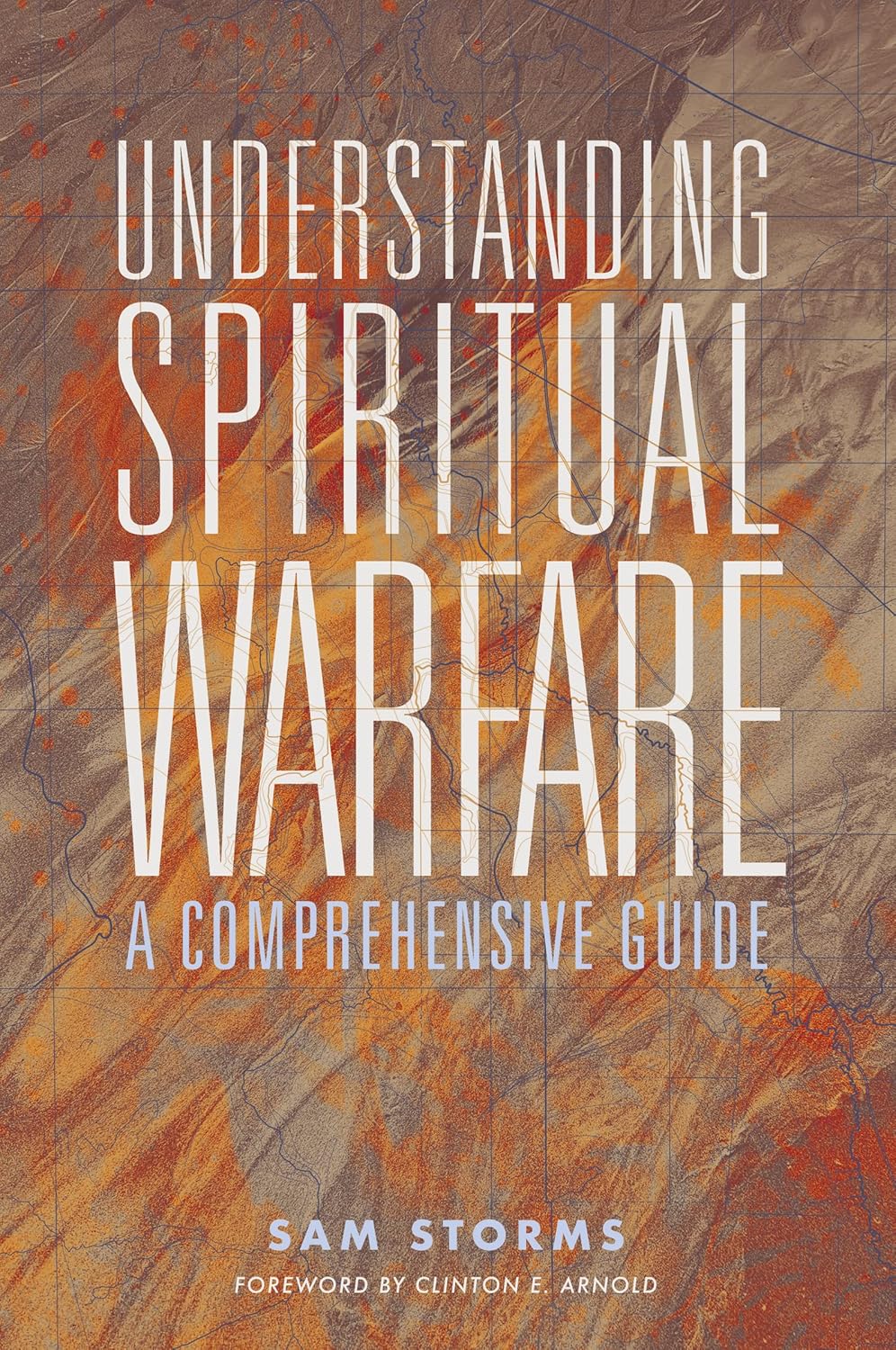
AUTHOR – SAM STORMS
GENRE – Biblical Theology
YEAR PUBLISHED – 2021
PAGE COUNT – 384
READABILITY- Easy
MY RATING – 4.4/5
What to expect?
- The Origin of Spiritual Warfare
- How to deal with the Spiritual Warfare
- Different kind of famous heresies
- Who is Anti Christ?
Sam Storms’s Spiritual Warfare provides an intense exploration of the cosmic battles shaping humanity. The book delves into biblical doctrines regarding angels, demons, the Antichrist & historical heresies, ultimately pointing believers to the critical necessity of prayer & reliance on God.
Angels, Demons & Heavenly Conflicts
Storms clarifies that the “Sons of God” in Genesis are celestial beings, an interpretation dominant in the patristic period until Augustine (354-430) argued they were Seth’s descendants. He refutes the objection that Matthew 22:30 precludes them from being angels, explaining that Jesus was describing holy angels in heaven, not earthly immoral ones. The text highlights angelic authority, noting Michael’s words to the Devil: “The Lord rebuke you”. Furthermore, Daniel’s 3 week fast & the ensuing struggle between the “Prince of Persia” & an unnamed Angel proves that human intercession provokes heavenly conflict. Daniel’s prayers influenced angels, who play a significant role in shaping the destinies of nations.
Satan, the Antichrist & the Beast
The book reveals Satan’s constant effort to copy God, substituting the Holy Trinity with Satan, the beast & the False Prophet. In Revelation, Satan is first referenced in the letter to Smyrna, a proud city regarded as the pride of Asia, which, alongside Philadelphia, received no complaints from the Lord. Conversely, Pergamum (Revelation 2:13) was the center for four major pagan cults: Zeus, Athens, Dionysus & Asclepios. Interestingly, the term “Antichrist” only appears in the Johannine Epistles (1, 2, 3 John), not Revelation. 1 John 2:22 identifies the Antichrist as the liar who denies the Father & the Son, while 1 John 4:3 & 2 John 7 state that the spirit of the Antichrist is in anyone deceiving the world & denying Jesus came in the flesh. This spirit existed in the first century & continues today, preceding a final personal embodiment.
Storms lists manifestations of the “beast” throughout history: the Roman Empire, the 4th century Arian Heresy denying Christ’s deity, the 3rd century persecutor emperor Decius, Evolutionary Darwinism, the Medieval Roman Catholic Papacy & modern Protestant liberalism. Other embodiments include Marxism, radical feminism, the 5th century Pelagian heresy, Communism, Joseph Stalin, 17th century enlightenment, 18th century deism, Roe V Wade, state persecution in China & North Korea, 21st century militant atheism & ISIS.
Heresies, Emptiness & Sin
Revelation 12:1-11 discusses the Devil’s defeat, yet heresies persist including 2nd & 3rd century Gnosticism & Marcionism, 3rd century Anti Trinitarian monarchianism, Arianism, Pelagianism, Medieval Roman Catholic false teachings, 16th & 17th century Socinianism, Deism, Darwinian evolution & 19th & 20th century religious liberalism. Another threat was the 1st century Colossians Heresy (Colossians 2:8-10), specifically Asceticism, which claimed the body was evil & starved it of desire to reach a spiritual positive.
John describes the horrid realization of having a false belief system, empty values, a bleak destiny & a lack of purpose. Without Jesus, people desperately seek meaning through complex philosophies, self indulgent hedonism, the new age movement, reincarnation, radical feminism, political agendas, homosexuality, drugs, sexual immorality, materialism. Demonic “Locusts” & “Demonic Wisdom” (James 3:13-18) lead people into these lifeless pursuits. Regarding sin, Exodus 20:4-6 describes punishment only for those who hate God, not innocent generations & Ezekiel 18:2-20 confirms each is punished for their own sin. God forgives by forgetting (Jeremiah 31:34), meaning He removes accountability. Jesus’s command to pluck out an eye or cut off a hand means believers must behave as if they had done so, actively avoiding places & things that previously caused sin.
Deliverance & the War of Prayer
Jesus’s mission called for faith based on evidence, not authoritative testimony. His deliverance methods were never ritualistic, mechanical, or magical; he used no incantations, candles, mood music, charms, chanting, dancing, holy water, incense, or cutting off chicken heads. He did not shout, jump, physically restrain people, or press a cross to their foreheads; he simply said, “Shut up! Get out!”. Matthew 8:16 notes he amazed people by casting out spirits with a word, never appealing to a higher authority, unlike Paul. Notably, Acts 19:13 is the earliest Greek literature occurrence of “exorcist” & its only New Testament appearance. Because self reliance is suicidal, our strength must come from the Lord. Spiritual warfare culminates in prayer, which is a struggle & a war. Paul exhorts believers to “keep alert” warning that daydreaming, falling asleep & distractions require diligent focus & perseverance. The easiest thing about prayer is quitting, which requires no effort, resolve, or planning. Believers must not grow weary or think God doesn’t care; answers may be yes, no, maybe wait or “I’m God & I’ve got a better idea!”.
The text outlines specific prayer strategies:
- Pray with all prayer & supplication: Pray for ourselves, for resistance & rebuke, for protection, over a location, for the afflicted & for angelic support, remembering Romans 8:26-39.
- Pray at all times in the spirit.
- Pray with all perseverance: Believers must resist giving up & pray without ceasing (1 Thessalonians 5:17).
Conclusion
In conclusion, Sam Storms’s Spiritual Warfare serves as a reminder that believers are engaged in an active, unseen cosmic battle. By tracing demonic deception from the ancient pagan cults to modern day heresies, Storms shows how Satan continuously attempts to mimic God & lead humanity into empty, lifeless pursuits. However, the text ultimately offers a message of profound hope & practical strategy. By reminding readers of Jesus’s simple, non ritualistic authority over demons, Storms emphasizes that Christians must never rely on their own strength. Instead, victory in this spiritual war demands unwavering alertness, resistance against the urge to quit & relentless, persevering prayer in the Spirit.