How did Ars Goetia Shape Modern Occult Cinema?
The Lesser Key of Solomon is a famous occult text from the 17th century & its most well known section is called the Ars Goetia. The Ars Goetia contains descriptions of 72 demons or spirits including their names, ranks, powers & symbolic seals (“sigils”) along with rituals said to summon or control them. The text claims that these spirits were once bound by King Solomon through divine wisdom & magical authority. Over time, the Ars Goetia became an important work in Western ceremonial magic & occult traditions, influencing later esoteric movements, demonology & modern occult culture.
Aleister Crowley was a British occultist & ceremonial magician who became one of the most influential figures in modern Western esotericism. In the early 1900s, Crowley together with S. L. MacGregor Mathers published an annotated edition of the Ars Goetia called ‘The Goetia’. Through this book, Crowley helped revive & popularize the text among modern occult circles. He connected the Goetia to broader systems of ritual magic, mysticism, Kabbalah & spiritual experimentation making it widely known beyond small secret societies. Because of Crowley’s influence, the Ars Goetia later became deeply embedded in modern occultism, influencing later magical traditions, pop culture depictions of demonology & contemporary esoteric movements.
The influence of these texts on popular culture is so pervasive that most people absorb it without knowing the source. The 72 demons of this book have provided Hollywood with its most enduring demonic characters like:
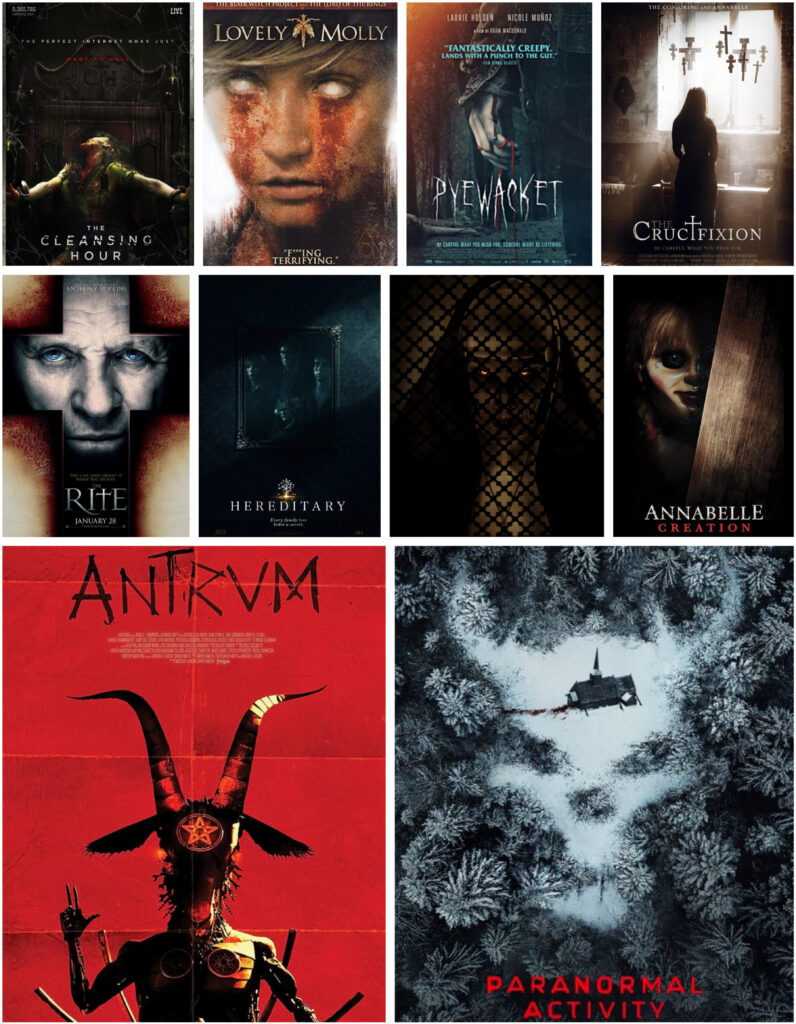
Asmodeus is the key demon from the Book of Tobit & Goetia which appears in the famous Paranormal Activity movie franchise.
Paimon is the central demon in Ari Aster’s Hereditary. It’s one of the most critically praised horror films of the last decade where his name, sigil & hierarchical status are drawn directly from the Goetia.
Valak surfaces throughout The Conjuring 2 & the wider Conjuring universe as the terrifying “The Nun” demon.
Malthus is referenced in Annabelle through themes of demonic manipulation & possession tied to cursed objects.
Aamon appears in The Cleansing Hour where occult possession and livestreamed exorcisms revolve around demonic deception.
Orobas appears in the psychological horror film Lovely Molly where themes of possession & occult influence echo the demonological traditions of the Goetia.
Agares is referenced in The Crucifixion, a supernatural horror movie centered around demonic possession & exorcism.
Baal appears in The Rite, which explores exorcism rituals & demonic manifestations within a Catholic framework.
Abyzou appears in Undertone, which explores about how the entity causes miscarriages, infertility & infant mortality (Abyzou is mentioned in Testament of Solomon & not directly in Ars Goetia)
The entire framework of The Exorcist, the idea that a demon has a specific name can be commanded & expelled through ritual language & operates within a defined hierarchy is Solomonic in structure even when it is not explicitly named as such. Beyond horror, the sigils & seals of the Goetia have appeared in Supernatural across fifteen seasons where the show’s demonology is essentially a dramatized version of the Lesser Key.
Interestingly, while earlier Hollywood films used demons as generic monsters, modern filmmakers are increasingly focusing on the specific mechanics of ceremonial magic. Films like A Dark Song (2016) recreate the grueling, months long Abramelin ritual which is another core text of the Western esoteric tradition heavily adjacent to the Goetia. This marks a shift in pop culture from merely borrowing scary names to actually dramatizing the grueling rituals, chalk circles & psychological toll described by occultists like Crowley and Mathers.The Da Vinci Code franchise draws on the Solomonic tradition’s connection to Freemasonry & the Temple.
The pattern is consistent. Hollywood does not invent its demonic mythology from scratch. It draws from a relatively small pool of source material & the Solomonic grimoires sit at the center of that pool. Directors and screenwriters may not always know they are working from these texts but the researchers who inform them do. While the Lesser Key of Solomon claims to be ancient magic handed down by King Solomon, the famous list of 72 demons was actually heavily plagiarized from a 1577 text called Pseudomonarchia Daemonum (The False Hierarchy of Demons), written by a Dutch physician named Johann Weyer. I’m still skeptical about the authenticity of the Ars Goetia (was it really practised by Solomon?), but there’s one way to find out & I’m definitely not taking that route.
Check the Three Magical Books of Solomon’s review here for more info.