WESTERN MYSTICISM & ESOTERICISM
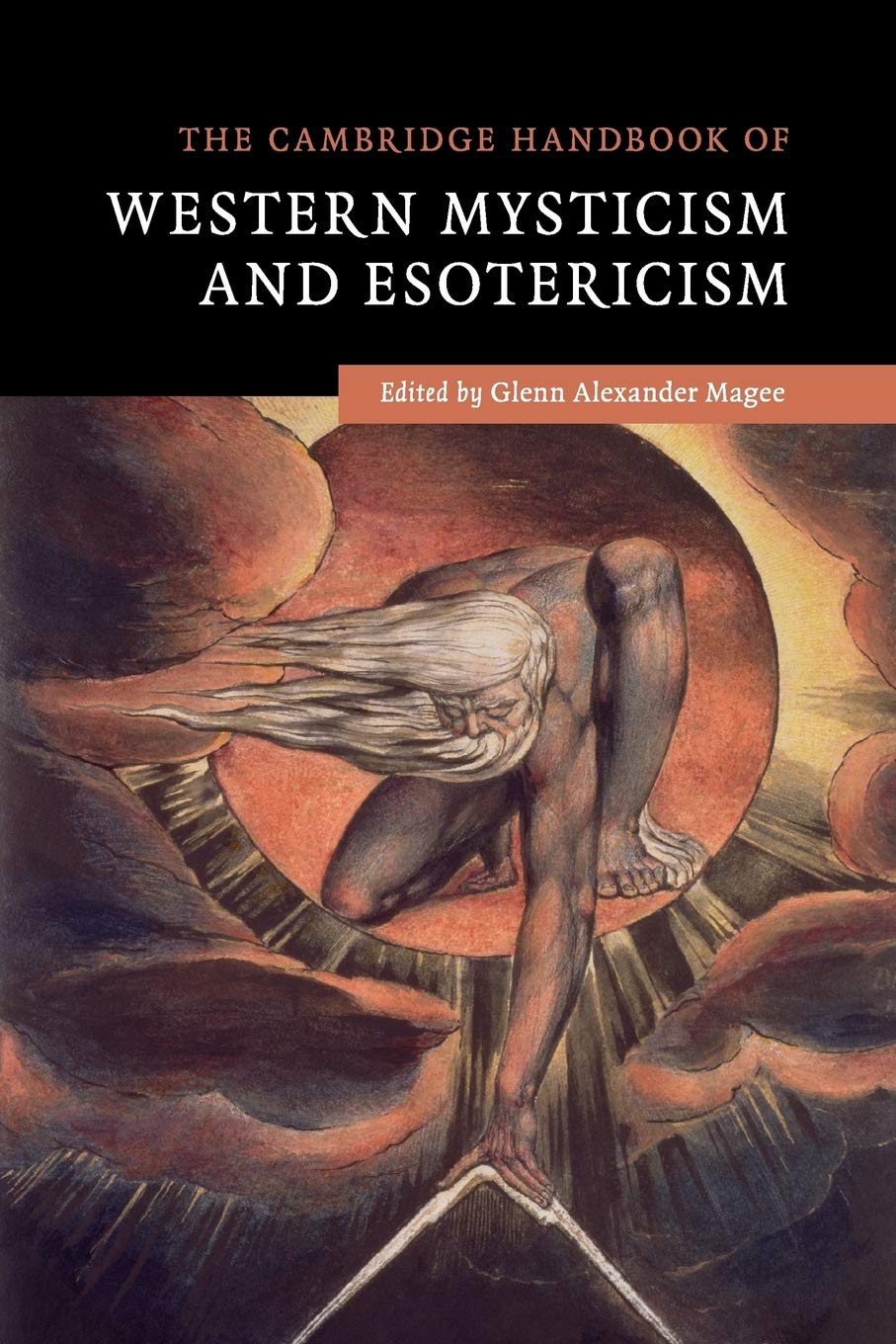
AUTHOR – Different Scholars for each topic
GENRE – History of Religious Studies
YEAR PUBLISHED – 2019
PAGE COUNT – 514
READABILITY – Moderate/Hard
MY RATING – 4.3/5
What to expect?
- All the topics are written by different scholars
- Each topics focuses on the origin & contemporary view
- Covers topics like Alchemy, Astrology, Magic, Neoplatonism, Kabbalism, Renaissance Hermetism, Freemasonry etc.
- Can be a dry read
Defining the Margins of Western Thought
For centuries, the history of Western thought has been taught primarily as a linear progression of rational philosophy & orthodox theology. Hidden just beneath the surface of this mainstream narrative however lies a vibrant, continuous counter current of spiritual seeking. The Cambridge Handbook of Western Mysticism & Esotericism edited by Glenn Alexander Magee serves as a definitive academic map of this complex undercurrent. The volume brings together leading global scholars to systematically analyze two distinct but deeply intertwined domains: Mysticism (the pursuit of direct, unmediated experiential union with the divine) & esotericism (the study of hidden, alternative spiritual knowledge & the secret laws of nature). Rather than treating these subjects as eccentric fringe movements, the handbook firmly establishes them as crucial pillars for understanding the complete evolution of Western civilization.
Scope, Structure & Methodology
The handbook is organized chronologically & thematically, dividing its vast historical scope into easily navigable sections. It spans from the ancient roots of the Mediterranean world through the medieval & Renaissance leading up to modern & contemporary works.
Ancient Roots & Foundations
The first major contribution of the handbook is its exploration of the ancient foundations that set the entire trajectory for Western esotericism. The chapters carefully break down three primary ancient currents:
- Hermeticism: Based on the Corpus Hermeticum (attributed to the legendary figure Hermes Trismegistus) this tradition treated the universe as a living, interconnected organism where the human mind can achieve divine illumination by understanding the hidden correspondences between the macrocosm (the universe) & the microcosm (the individual).
- Gnosticism: The early centuries of the common era saw various Gnostic sects argue that the physical world was a flawed prison created by an inferior deity (the Demiurge) & that salvation is achieved through private, esoteric gnosis (spiritual knowledge) rather than orthodox faith.
- Neoplatonism: Pioneered by Plotinus, this philosophical framework viewed reality as a series of cascading “emanations” from a single, unknowable source (“The One”), providing a structural baseline that both Christian mystics & later magicians used to explain how the human soul can ascend back to the divine.
Kabbalah & the Renaissance Synthesis
The handbook highlights the Renaissance as a golden age of esotericism where the influx of ancient texts & Jewish mysticism into Western Europe triggered a massive intellectual revolution. A central pillar of this section is the study of Kabbalah which originally is a traditional Jewish mystical system focused on the emanations of God (the Sefirot) & the hidden meanings within the Hebrew alphabet.
During the Renaissance, scholars like Giovanni Pico della Mirandola & Johannes Reuchlin adapted these concepts into Christian Kabbalah. They argued that Jewish mystical texts contained hidden proofs of Christian doctrines such as the Trinity & the divinity of Jesus. This synthesis reframed the Renaissance magus (magician) as a precursor to the modern scientist by combining Kabbalistic linguistic mysteries with alchemy & “natural magic”. These thinkers believed humanity could decipher the rational, hidden laws governing the cosmos.
Secret Societies & Freemasonry in the Enlightenment
A fascinating aspect of Magee’s handbook is its deep dive into the 17th & 18th centuries demonstrating that the “Age of Enlightenment” was deeply saturated with esoteric ideas. The chapters explore the rise of Rosicrucianism i.e ‘a mysterious movement announcing a universal reformation of mankind through hidden spiritual arts’ & the widespread institutional growth of Freemasonry.
The handbook provides a rigorous historical breakdown of Freemasonry tracing its evolution from medieval stonecutters’ guilds into an international network of speculative philosophical lodges. Freemasonry acted as an alternative institutional space where Enlightenment ideas, architectural symbolism (like the “Grand Architect of the Universe”) & esoteric rituals could merge outside the control of orthodox state churches. The volume reveals how these secret societies created spaces for intellectual networking that heavily influenced modern democratic movements, secular philosophy & political revolutions.
The Modern Occult Revival
The final sections of the book tackle the 19th century “Occult Revival” & its evolution into modern culture. It analyses the massive influence of Helena Blavatsky & the Theosophical Society which attempted to synthesize Western esotericism with Eastern philosophies like Hinduism & Buddhism. It also catalogs the operations of the Hermetic Order of the Golden Dawn which codified Western ritual magic, tarot & astrology into a highly organized system that deeply influenced modern art, literature & popular culture.
Conclusion
The Cambridge Handbook of Western Mysticism & Esotericism achieves a profound academic verdict: It demonstrates that you cannot fully understand the history of the West if you ignore its secrets. By restoring these marginalized, suppressed & alternative worldviews from Kabbalistic mysticism to Freemasonic architecture to their proper historical context, Glenn Alexander Magee & his team of scholars offer an indispensable reference work. It proves that the human drive to experience the divine directly & to uncover the hidden secrets of nature is one of the most enduring, rational & powerful forces in human history.
This is a reference book & not a cover to cover read